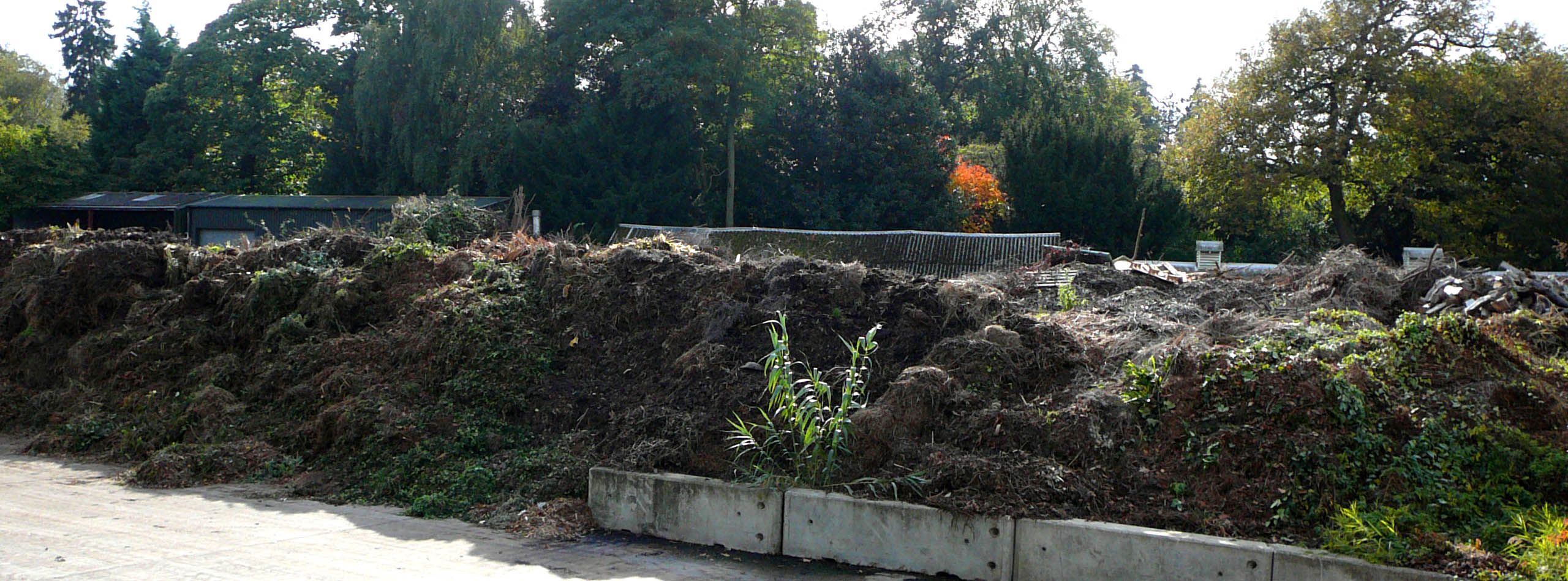
What composting actually does
Decomposition is carried out by bacteria, fungi, and small soil invertebrates. They break down carbon-rich and nitrogen-rich materials into stable organic matter — humus — which has a high capacity to hold both water and nutrients. In heavy clay soils, which are widespread in Mazovia, Lower Silesia, and Kujawy, adding compost annually changes the physical structure: clay particles bind to organic matter in a way that improves drainage and aeration without sacrificing moisture retention.
In sandy soils — more common in Warmia-Mazury and parts of Greater Poland — compost acts mainly as a water reservoir and nutrient source, both of which drain away rapidly in unimproved sandy ground.
Choosing a location
The pile should be placed on bare soil rather than on concrete or paving. Direct soil contact allows earthworms and other organisms to migrate into the pile. Semi-shade is preferable: full sun dries the pile quickly in summer, requiring frequent watering. North-facing walls or spots shaded by a fence for part of the day work well.
Polish municipal regulations in most voivodeships allow home composting of vegetable and garden waste without permits. Meat, cooked food, and dairy are not appropriate for open garden compost piles regardless of legal status.
What to add — and in what ratio
Effective decomposition requires a carbon-to-nitrogen ratio in the pile of roughly 25–30:1. In practice this means roughly two parts brown material (dry leaves, straw, cardboard torn into small pieces, untreated wood chips) to one part green material (fresh grass clippings, vegetable peelings, coffee grounds, plant trimmings). This is an approximate guide — exact ratios are less important than avoiding extremes.
Carbon-rich materials (browns)
- Dry autumn leaves — abundant in Polish gardens from October onward
- Straw from vegetable beds used as mulch
- Torn cardboard (remove tape and printed labels with heavy ink)
- Small untreated wood chips or sawdust from untreated timber
- Paper bags, unbleached paper towels
Nitrogen-rich materials (greens)
- Vegetable and fruit scraps from the kitchen
- Grass clippings — add in thin layers to prevent matting
- Coffee grounds and paper filters
- Fresh garden plant trimmings
- Weeds that have not yet set seed
What to exclude
- Meat, fish, bones, cooked food — these attract rodents
- Dairy products
- Diseased plant material (blight-infected tomato leaves, for example)
- Weeds that have already seeded
- Treated timber or plywood sawdust
- Citrus peel in large quantities — breaks down slowly and can inhibit worms
Managing the pile through the year
In Poland's climate, active decomposition happens from April through October. Outside this window, the pile continues but very slowly. Turning the pile — using a fork to move outer material to the centre — every three to four weeks during the active season accelerates decomposition by reintroducing oxygen. A pile that is never turned will still decompose, but over 12–18 months rather than 6–9.
Moisture
The pile should feel damp but not wet — roughly the texture of a wrung-out sponge. In dry July and August conditions in central Poland, watering the pile once a week may be necessary. Covering the top with a piece of old carpet or breathable fabric (not plastic sheeting, which prevents gas exchange) retains moisture and warmth.
Signs of a problem
A pile that smells of ammonia has too much nitrogen material. Add more browns and turn it. A pile that smells of rotten eggs has become anaerobic — it needs turning and possibly the addition of dry material to open up air pockets. A pile that shows no heat and no visible decomposition is probably too dry or too carbon-heavy.
Using finished compost
Finished compost is dark brown, crumbly, earthy-smelling, and no longer recognisably made of the original materials. In Polish growing conditions, the ideal application time is autumn — worked lightly into the top 10 cm of soil after harvest — or early spring before planting. A 3–5 cm layer across vegetable beds each season is a reasonable starting point.
Compost applied as a surface mulch (without digging in) works well around perennial plants and fruit trees, where soil disturbance is best avoided. Earthworms pull it downward over winter.
The Polish Ministry of Climate and Environment publishes guidance on home composting as part of biowaste management regulations. Municipal offices in many gminas also offer compost bins at reduced cost as part of waste reduction programmes.
Last updated: May 20, 2026. Information reflects general organic gardening practice and Polish climate conditions.

